
This piece was originally published by Caroline Pudner, Senior Internal Communications Officer at Sheffield Hallam University in the We Are Hallam newsletter The true value of our Three Minute Thesis competition
Could you explain – in an engaging and clear way – the purpose, scope and impact of your work in just three minutes (and using only one static slide)?
Our annual final of the Three Minute Thesis® (3MT®) asked exactly that of Hallam’s postgraduate researchers last month.
This rewarding yet challenging competition is organised by our Researcher and Innovator Development Academy (RIDA) / Doctoral School and has been running here since 2015, garnering consistently positive feedback from participants and staff.
Here, we take a look at what’s involved in the competition, our finalists and winners, and how 3MT® benefits both students and the colleagues who attended.
About the competition
3MT® is a globally recognised research communication competition, founded by the University of Queensland, with a very simple premise: An 80,000-word PhD thesis would take 9 hours to present. Their time limit… 3 minutes. 3MT®provides a platform for our postgraduate researchers to showcase and communicate their research, developing vital skills along the way.
All entrants were supported (via workshops, online resources and feedback) to develop a 3-minute script and a single PowerPoint slide. The shortlisted finalists then practiced and refined their presentation with their mentor until they could deliver it clearly and confidently for any audience to understand and enjoy.
This year, we had enough entries to run a heat stage with the best three from each college proceeding to the final. The judges were scoring on ‘Comprehension and Content’ as well as ‘Engagement and Communication’ – the audience had a vote, too.
Making it inclusive
Our 3MT® competition is open to all our postgraduate researchers (PhD and Professional Doctorate) in any discipline, year or mode of study. This year, to make it even more inclusive, we ran it online via pre-recorded video entry. This enabled judges and finalists who weren’t available in Sheffield on the day of the final to take part.
Closed captions were included on the videos, and edited in advance, so that names and technical language were conveyed accurately, making it easy to follow.
We also took on board the suggestion to work with Rich Nind, Lucy Morehen and Liz Escadale to understand what assistive technology we could use and to arrange live captioning for the final – crucial for an event where the accuracy of feedback that is being received publicly matters.
As a finalist said: “This was an inclusive event because the organisers took the time to pay for a professional captioner, and that should be the standard for virtual events to make sure they are inclusive. It’s great that it was all filmed, as I’d love for my mum to see it!”
This year’s finalists and their projects
| Name | Research project | Link to presentation (log in via Panopto) |
| Maysa Alsharif | The Critical Case of Gaza’s Healthcare: Organisational Resilience Through Medical Students’ Education | Maysa Alsharif 3MT 2026 Final entry |
| Samiulhaq Chardiwall | Bio-Inspired Multimodal Approach to Human Action Recognition | Samiulhaq Chardiwall 3MT 2026 Final entry |
| Tess Gilligan | Investigating the accuracy, reproducibility and efficiency of upright radiotherapy | Tess Gilligan 3MT 2026 Final entry |
| Shashwat Guha Highly Commended and People’s Choice Winner | The Hidden Mouth-Brain Connection: Why brushing your teeth matters more than you think! | Shashwat Guha 3MT 2026 Final entry |
| Chella Quint Judges’ Choice Winner and Vitae Semi-finalist | Time Periods and Menstrual Time Travel: Crafting Intergenerational Narratives, Pre-Menarche to Post-Menopause | Chella Quint 3MT 2026 Final entry |
| Paria Rezayan | DOSITA: Towards Data Driven Online System Identification Tool for Autonomous Marine Vessels | Paria Rezayan 3MT 2026 Final entry |
| Ikram Sadiq Highly Commended | Growing Resilience: How Living Buildings Can Cool a Warming City | Ikram Sadiq 3MT 2026 Final entry |
| Nazish Shafique | Machine Learning Framework for Automated Extraction of Swimming Race Performance Metrics | Nazish Shafique 3MT 2026 Final entry |
Reflections from two of our finalists
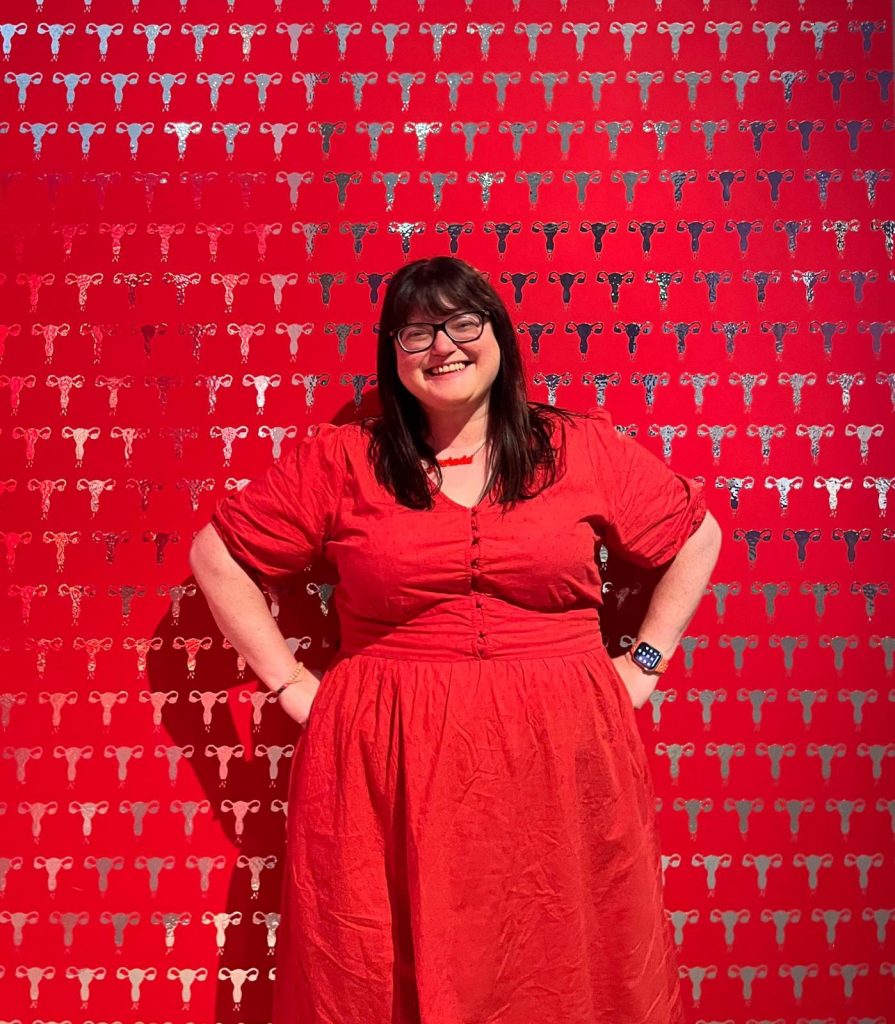
“It is a brutal process but incredibly helpful, and something I can apply outside of university, with any kind of public speaking. Those three minutes really helped me refine my arguments and feel proud of my work.
“Working with a mentor within the University was lovely. It also gave me a great opportunity to do some public engagement work, which I hadn’t done yet for my PhD, and I found that really enjoyable.”
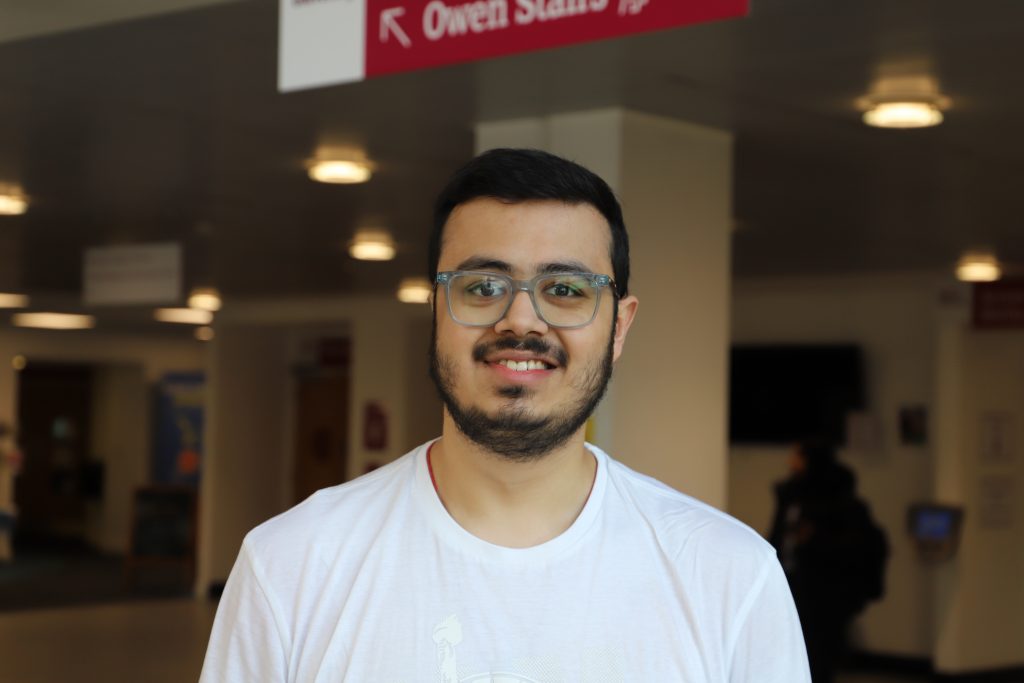
“One of the biggest challenges of the 3MT competition was condensing a complex topic into a clear and engaging three-minute presentation. I overcame this by focusing on the key message and using relatable examples. Rehearsing also helped me refine and stay within the time limit.
“It’s helped me develop skills that will benefit my future career: to communicate scientific ideas to non-specialist audiences, and identify the most important aspects of a project. These are essential skills for research dissemination, grant applications and interdisciplinary collaboration.”
Further reflections from participants, judges, and colleagues
“I really enjoyed the finals, especially listening to the presentations of the other participants and the interesting research they do.”
“Candidate presentations were excellent. They were polished, informative and it was a wonderful opportunity to learn more about the doctoral research at Hallam. All the candidates should feel very proud of their achievements.”
“I valued hearing about the breadth of doctoral research taking place at Hallam and seeing how passionate the researchers were about their topics. Seeing them all in the same format meant they could all be judged objectively. It felt more inclusive to have the speeches pre-recorded and captioned.”
“I valued the extremely high standard of the presentations and the variety of topics covered.”
“I valued hearing about the wide variety of postgraduate research and seeing their brilliant communication skills in action.”
“It made me feel like I would like to enter the competition later on in my PhD.”
Final word of thanks from the organisers
We’d like to thank all involved with this year’s competition, including:
- All of the Doctoral Researchers who took part
- Academic colleagues in the Doctoral School, RIDA and College PGR teams who promoted the competition, judged the College heats and mentored our 3MT® finalists: Dr Alisha Ali, Dr Rob Appleyard, Dr David Asquith, Michelle Atherton, Dr Ellen Bennett, Dr Susan Campbell, Prof Doug Cleaver, Dr Francis Clegg, Dr Carlos Da Silva, Dr Jon Dean, Dr Ester Ehiyazaryan-White, Dr Penny Furniss, Dr Samah Issa, Dr James Marson, Dr Gaynor Miller, Dr Emily Moorlock, Dr Sadie Parr, Dr Olga Polyakova, Dr Robin Smith, Dr Joe Stone and Dr Kate Whitfield.
- Dr Ronak Janani, Dr Shruti Mandhani and Dr Matt Hill for sharing their experiences and leading the 3MT® workshop
- The judging panel: Alex Prince, Dr Kirsty Hemsworth and Alison Honnor chaired by Dr Nicola Palmer
- Caroline Pudner and Jo Beattie for sharing their tips on research communications.
- The Doctoral School and RIDA Teams for coordinating and hosting, particularly Jess Bamonte, Dr Gaynor Miller, Dr Nicola Palmer and Dr Elizabeth Scanlon
- Everyone who attended the online final and voted for their favourite 3MT® presentation.
Find out more
Further details of our 2026 competition are on the RIDA website including a recording of the final that took place on 22 June. We will announce plans for 3MT 2027 in the next few months.
The Vitae 3MT Competition final 2026 will be streamed live on Thursday 1 October 2026.
Our thanks to Elizabeth Scanlon from RIDA for her significant input into the writing of this piece.