
The Sheffield Hallam 3MT final took place on 22 June 2026, a recording of the session is available here.
Winners
Congratulations to all of our fantastic 3MT® 2026 finalists and especially to our winners:
Judge’s Choice Winner: Chella Quint
Ikram Sadiq and Shashwat Guha were also Highly Commended by the judging panel.
People’s Choice Winner: Shashwat Guha
Meet the Finalists

Chella Quint
Lab4Living in Art and Design
College of Social Sciences and Arts (SSA)
Time Periods and Menstrual Time Travel: Crafting Intergenerational Narratives, Pre-Menarche to Post-Menopause
My PhD explores how trauma-informed creative activities can help people talk about menstrual life across time within families and across generations. Using workshops based in art, design, and storytelling, participants reflect on menstrual events from the past, present, and future, and turn those reflections into timelines, objects, and conversations. The project focuses on how people describe and make sense of experiences such as periods, menopause, and other menstrual milestones, and what happens when these are discussed in relation to memory, family life, and personal change over time. Rather than assuming better outcomes in advance, I am examining what these creative methods make visible: what they help people express, what patterns they reveal, and whether they open up new kinds of family communication. The research sits at the intersection of participatory design, menstrual health, and lived experience, with the aim of developing thoughtful, grounded approaches to discussing menstrual life more openly.
Ikram Sadiq
Sheffield Creative Industries Institute
College of Social Sciences and Arts (SSA)
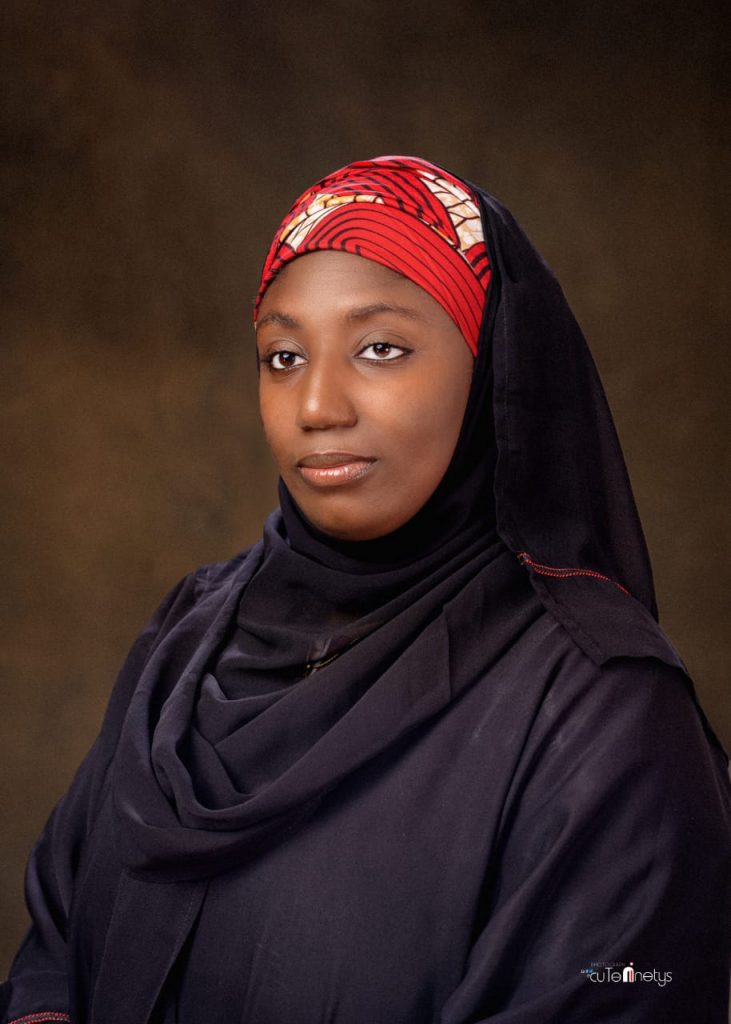
Growing Resilience: How Living Buildings Can Cool a Warming City
Rapid urbanisation is reshaping Nigeria’s cities. As populations grow and concrete and other hard surfaces replace trees and green space, cities are heating up, creating Urban Heat Islands where temperatures climb far above those of the surrounding land. For millions of people, this means homes that stay uncomfortably hot day and night, with real consequences for health, sleep, and wellbeing. As both populations and temperatures continue to rise, climate change is set to worsen this.
This study explores the use of plants in the built environment through green roofs, living walls, vertical gardens, and edible plantings as a natural way to cool cities. Rather than relying on energy-intensive air conditioning, it works with nature to lower temperatures, while also offering cleaner air and locally grown food. Focusing on a tropical Nigerian city, the research examines how these green interventions perform in real urban conditions, turning those findings into practical guidance for architects and planners, supporting cities that stay cool, care for their people, and are ready for a warming world.
Maysa Alsharif
Sheffield Business School
College of Business, Technology and Engineering (BTE)
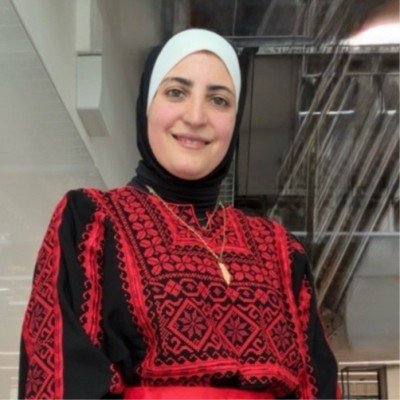
The Critical Case of Gaza’s Healthcare: Organisational Resilience Through Medical Students’ Education
Over the past decades, organisational resilience has attracted increasing scholarly attention. However, much of this research is grounded in Western and relatively stable contexts, limiting its application to turbulent environments. Gaza’s healthcare, shaped by prolonged conflict, provides a critical setting for examining organisational resilience under extreme conditions.
This study explores how Gaza’s healthcare system, operating under a high-intensity conflict setting, sought to reinforce resilience by integrating medical students into mainstream care delivery. Adopting a qualitative case study and documentary analysis, the research integrates established resilience theories with the Palestinian concept of ‘Sumud’, a culturally embedded steadfastness and persistence in the face of adversity, to develop a more contextually grounded knowledge of resilience in extreme environments.
This study is expected to offer a novel insight into the development of organisational resilience in extreme settings, with implications for strengthening the preparedness of healthcare systems and other organisations in an increasingly uncertain world.
Samiulhaq Chardiwall
School of Computing and Design Technology
College of Business, Technology and Engineering (BTE)

Bio-Inspired Multimodal Approach to Human Action Recognition
Human action recognition (HAR) is a core capability for effective human–robot interaction (HRI), demanding continuous, low-latency, and power-efficient operation in real-world environments. While conventional deep learning approaches achieve strong performance on vision-based benchmarks, their dependence on dense frame processing and computationally intensive training limits their deployment on energy-constrained robotic platforms. This work proposes a bio-inspired multimodal framework for HAR and early action prediction, leveraging spiking reservoir computing through Liquid State Machines (LSMs). The approach integrates complementary sensing modalities: sparsely sampled RGB frames provide semantic and spatial context, while event-based vision captures fine-grained temporal dynamics asynchronously. Extracted RGB features are fused with event streams within a recurrent spiking reservoir, enabling rich spatio-temporal encoding without training recurrent connections. Learning is restricted to an efficient readout layer, supporting rapid adaptation and online inference. The framework is evaluated on NMNIST and Guesture datasets, with progression toward complex real-world scenarios, establishing a scalable foundation for robust, real-time HRI systems.

Paria Rezayan
School of Engineering and Built Environment
College of Business, Technology and Engineering (BTE)
DOSITA: Towards Data Driven Online System Identification Tool for Autonomous Marine Vessels
Autonomous marine vessels rely on accurate manoeuvring models to ensure safe, energy-efficient, and robust maritime operations. These models depend on hydrodynamic derivatives that describe how a vessel responds to control inputs and environmental forces in the sea. However, in most existing system identification frameworks, these derivatives are estimated offline from recorded manoeuvring data and are assumed to remain constant, despite their sensitivity to changing operating conditions such as loading and environment. This disconnect can lead to digital‑twin divergence and reduced operational safety. Our research proposes DOSITA, an integrated, real‑time system identification framework in which manoeuvre execution, data acquisition, and hydrodynamic parameter estimation occur simultaneously within a digital‑twin‑enabled simulation environment. By combining automated standard manoeuvres, high‑fidelity virtual sea trials using the Marine Robotics Simulator (MARUS), and hybrid physics‑machine‑learning approaches, DOSITA enables continuous online estimation of coupled hydrodynamic derivatives. In doing so, it provides a validated approach to continuously synchronised, physically interpretable, and operationally robust manoeuvring models suitable for safety‑critical autonomous marine systems.
Tess Gilligan
School of Health and Social Care
College of Health, Wellbeing and Life Sciences (HWLS)
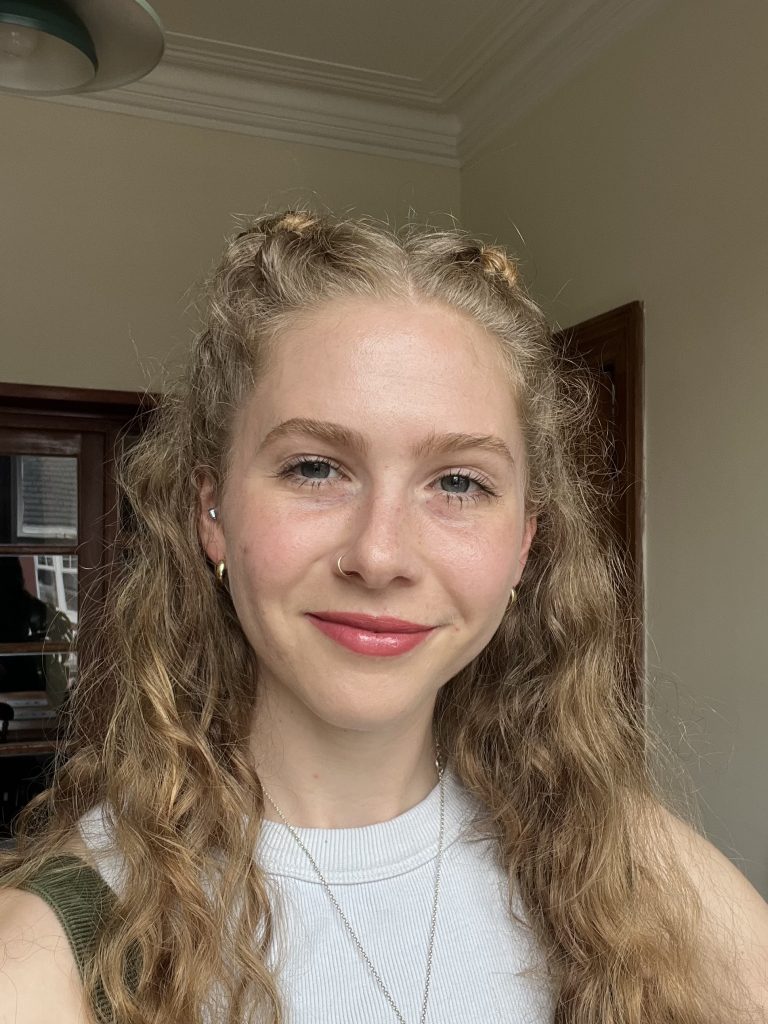
Investigating the accuracy, reproducibility and efficiency of upright radiotherapy
Many radiotherapy patients experience significant discomfort due to treatment positioning. Individuals with head and neck cancers, for example, may struggle to breathe or swallow due to treatment-related side effects, yet are required to lie flat and immobilised with a mask. Others, such as breast and pelvic cancer patients, report physical strain and vulnerability when positioned on hard treatment beds. Despite the NHS Cancer Plan’s emphasis on patient empowerment, current positioning methods can limit comfort and autonomy.
Radiotherapy chairs offer a potential alternative, allowing patients to sit or perch, improving comfort, swallowing, breathing, and sense of control. However, evidence supporting their clinical viability remains limited, particularly regarding patient stability and setup time.
This research aims to address this gap by identifying a tool to measure patient movement in seated positioning and comparing it with traditional supine positioning, contributing essential evidence toward more patient-centred radiotherapy practices.
Shashwat Guha
Biomolecular Sciences Research Centre (BMRC)
College of Health, Wellbeing and Life Sciences (HWLS)
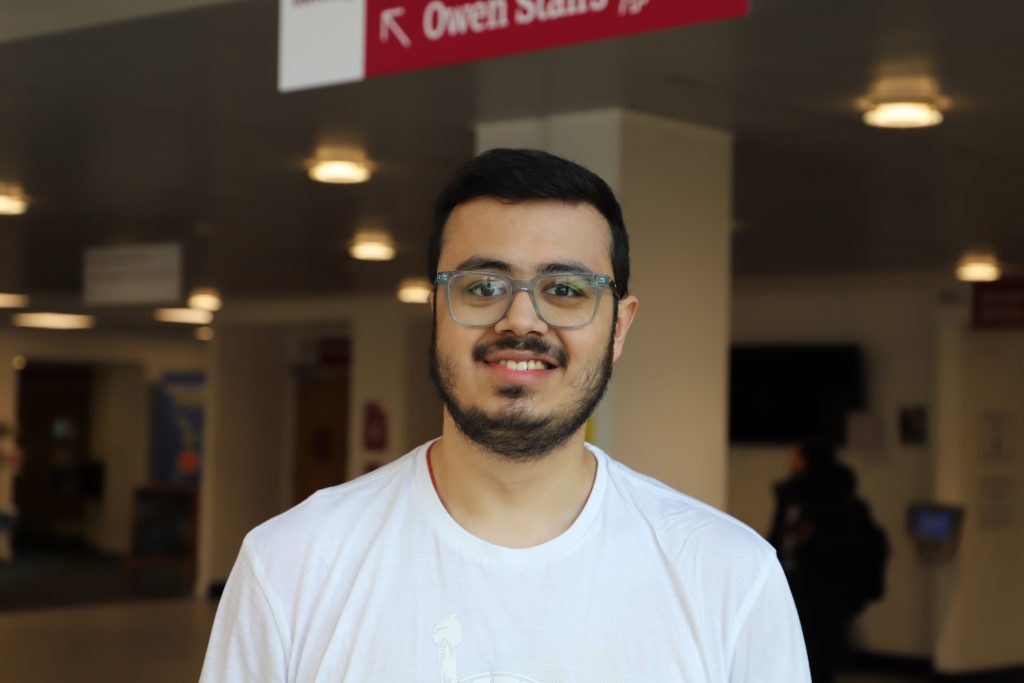
The Hidden Mouth–Brain Connection: Why brushing your teeth matters more than you think!
Protecting our memory tomorrow might start with something as simple as brushing our teeth today. Alzheimer’s is the most common form of dementia, and damage often accumulates silently in the brain over 10 – 20 years before symptoms appear. Growing evidence suggests that bacteria responsible for gum disease may play an unexpected role in this process. Chronic gum inflammation allows oral bacteria to enter the bloodstream and potentially invade the brain, where they can disrupt cell function. My research investigates how bacteria might drive toxic protein build‑up – a defining feature of Alzheimer’s. Using post‑mortem brain tissue alongside models of brain cells, we aim to identify the presence and activity of specific bacteria to assess their impact on brain health using pathological biomarkers. Understanding this hidden mouth–brain connection can help us better understand Alzheimer’s and reveal new lifestyle strategies that could prevent or slow down dementia progression in the future.
Nazish Shafique
School of Sports and Physical Activity
College of Health, Wellbeing and Life Sciences (HWLS)
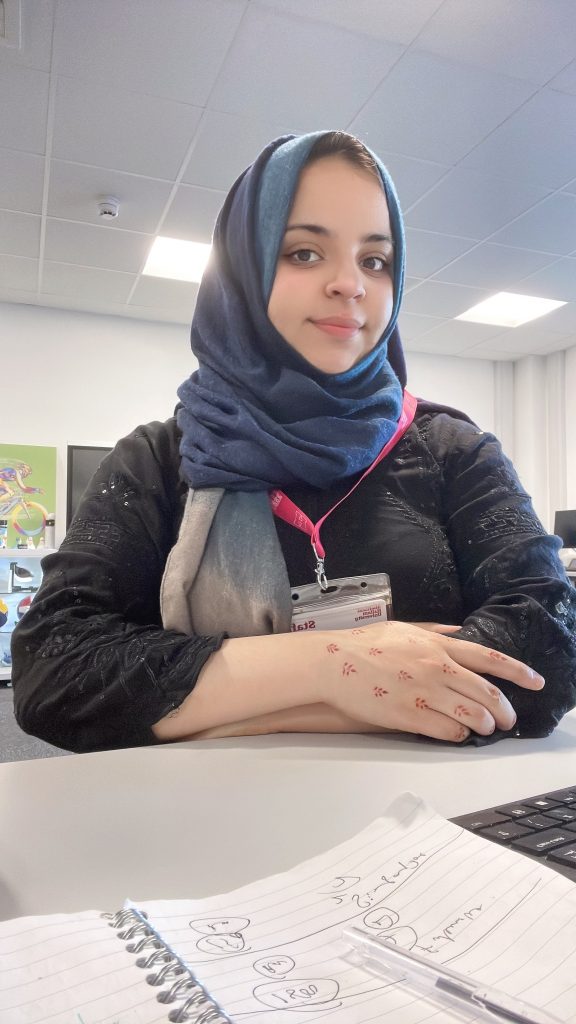
Machine Learning Framework for Automated Extraction of Swimming Race Performance Metrics
This study develops an automated system for analysing competitive swimming performance using high-resolution 4K video footage. It aims to extract objective performance metrics across the four main strokes freestyle, butterfly, backstroke, and breaststroke while addressing challenges such as water splash, limited visibility, and varying lighting conditions.
The motivation for this work is to improve the consistency, precision, and scalability of performance evaluation in swimming. Traditional analysis methods rely heavily on manual observation, which can be subjective, inconsistent, and time-consuming. By introducing a machine learning-based approach, the study supports coaches, athletes, and sports scientists in gaining more reliable insights into technique efficiency and race performance.
To achieve this, the research applies computer vision and machine learning techniques to process competitive race footage, detect swimmers, and compute key performance metrics such as head position and swimming distance. A structured methodology, literature review, system design, and model development, resulting in a scalable and adaptable framework for objective swimming performance analysis.